- interview
- update
- news
- collectibles
- building
Founder Showcase: Pratik | Part 1
joeyvowels ·
Pratik on Collecting, Product Design, and Building Beezie for Collectors
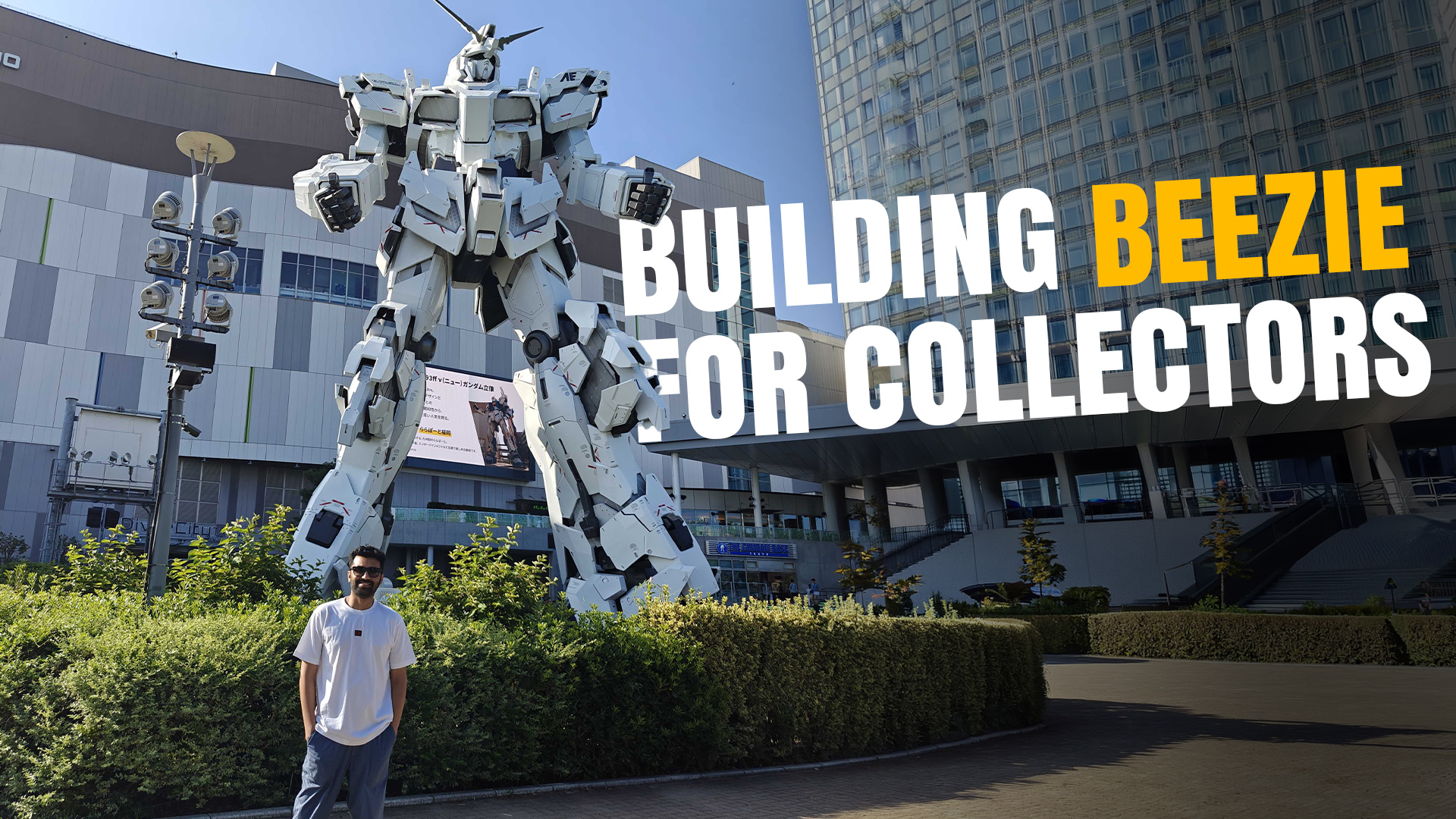
Before Beezie became a platform for modern collecting, Pratik was a collector himself.
From cricket cards growing up in India to graded One Piece cards and modern Pokémon today, collecting has always been a major part of his life.
That perspective has shaped the way Beezie is built.
We sat down with Pratik to talk about his journey as a collector, the frustrations he wanted Beezie to solve, and why transparency has always been at the center of the product.
I got into collecting pretty early.
Growing up in India, cricket was a huge part of life, so I started with cricket cards.
Most of my school years were spent collecting, trading, and building those sets.
Back then, it was less about value and more about the excitement of owning something connected to the sport I loved.
Over time, that evolved into collecting football jerseys, which felt like a natural extension of the same mindset.
Today, my focus is mainly on graded One Piece cards.
Alongside that, I also collect modern Pokémon cards.
Being a collector has a direct impact on how I build Beezie.
It starts with understanding the pain points I personally experienced across other platforms, whether it is trust, usability, or how fragmented the experience can be.
From there, I think about how I would solve those problems for myself first.
That naturally extends into conversations with other collectors where we can validate those insights and uncover new ones.
The result is a product that is built with a strong community lens while still making it seamless for people to buy and sell the collectibles they care about.
One of the biggest frustrations in collectibles is how fragmented and offline the market still is.
Discovery, trust, and transactions are spread across multiple channels, which creates friction and limits liquidity.
Liquidity itself is a major gap.
Collectors often hold valuable items but struggle to access real-time demand or exit quickly.
The market is also heavily US-focused, even though the collector base is global.
Beezie is built to solve this by making collectibles digital, borderless, and always accessible.
Some of the biggest pain points we focus on are:
Trust and authenticity concerns
Clunky user experiences
Lack of instant liquidity
Inefficient discovery
Limited utility after owning an item
For me, the ideal collecting experience is fully digital.
I want to be able to view my entire collection on my phone anytime, from anywhere.
The real unlock is mobility and access.
Being able to buy or list an item for sale globally without friction feels like a superpower.
I do not want to worry about physically carrying slabs or sneakers just to showcase what I own.
Transparency has been a core principle for Beezie from day one.
Even before writing a single line of code, we secured our vault with Brink’s.
That decision set the foundation for everything that followed.
As collectors ourselves, we experienced the downsides of peer-to-peer platforms where trust is not always guaranteed.
Scams, misrepresented items, and uncertainty are real issues.
That is why Beezie is built with a custodial layer.
Every item is verified and stored securely so users know what they see is exactly what they get.
The thinking behind showing inventory, odds, and instant swap values comes down to transparency.
We have all seen platforms where what is shown does not fully reflect what is actually available.
With Beezie, the claw machines show real-time inventory, clear tier breakdowns, and odds that update frequently.
This gives users full visibility into what they are engaging with.
Instant swap is an extension of that same principle.
It gives users clarity on value and the flexibility to make a decision immediately.
At its core, Beezie was built the way we would expect a platform to work as collectors, with honesty, clarity, and control.